haul gallery
Raised-In-Brooklyn
Artist in Residence 2026
Jennica Drice is a Haitian artist working with textiles, indigo dye, and cyanotype to explore migration, memory, and the transmission of cultural knowledge through domestic objects and rituals. Her practice centers material investigation and the preservation of personal and collective histories.
Between Us examines the diaspora experience through the objects, communications, and rituals that traverse the 1,560 miles between Haiti and Brooklyn. Working exclusively in blue through indigo dye and cyanotype, Jennica Drice explores what is carried, what is sent, and what is created in the space between two homes.
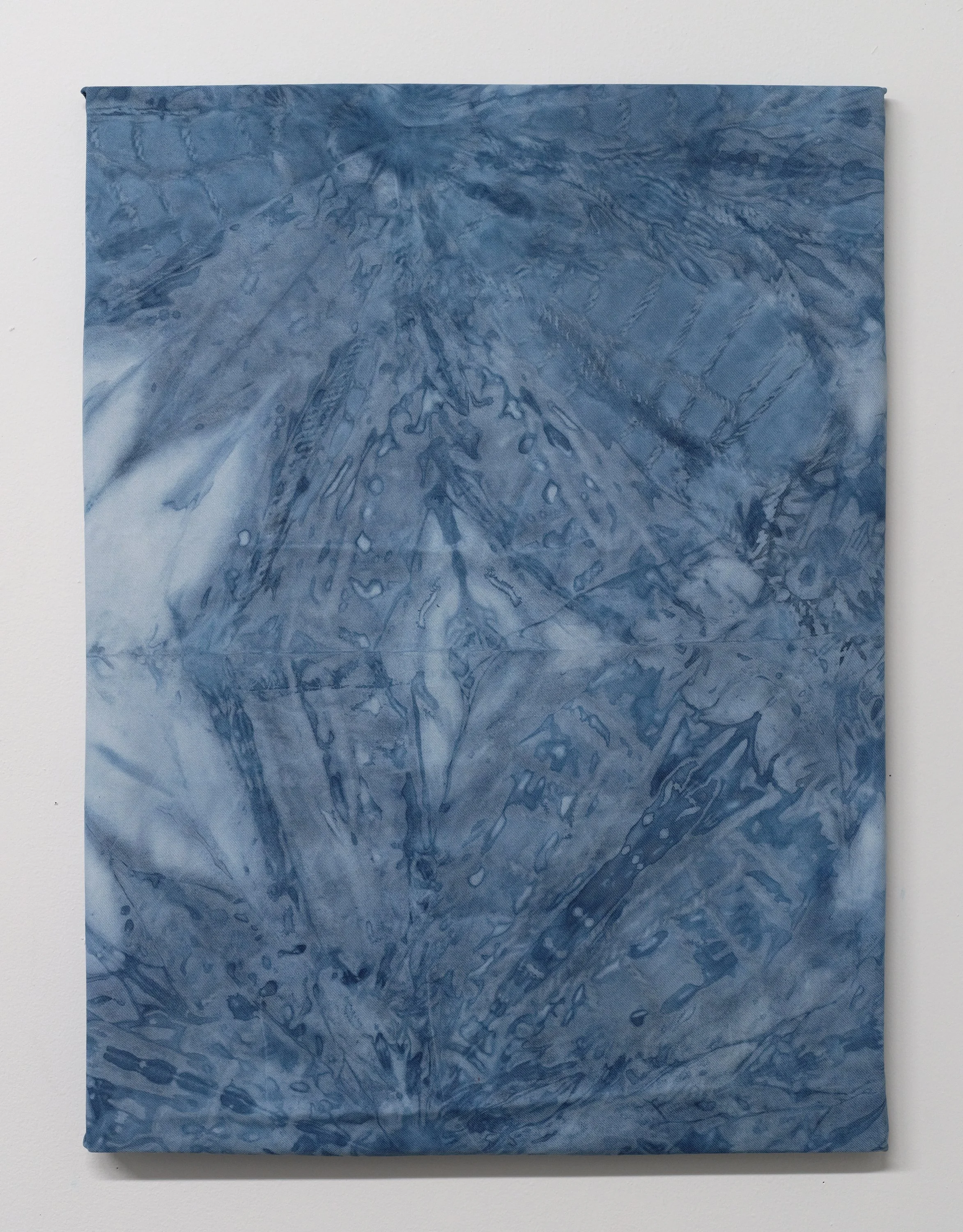
Blue is the color through which Drice processes memory. It recalls the vivid walls of her grandparents’ home in Port-au-Prince where she lived until the age of twelve, the Atlantic Ocean that both separates and connects Haiti and New York, and the cyanotype process that transforms sunlight into preservation. Through indigo dyed textiles and light sensitive prints, Drice creates a space saturated in blue where personal and collective histories converge.
A small radio placed within the installation plays a looping soundscape of archival recordings from Lè Ayisyen (The Haitian Hour), a Creole radio program broadcast from Columbia University between 1969 and 2002. Layered with music and storytelling, the audio evokes domestic life in diaspora and the ways cultural memory circulates through informal channels of transmission.
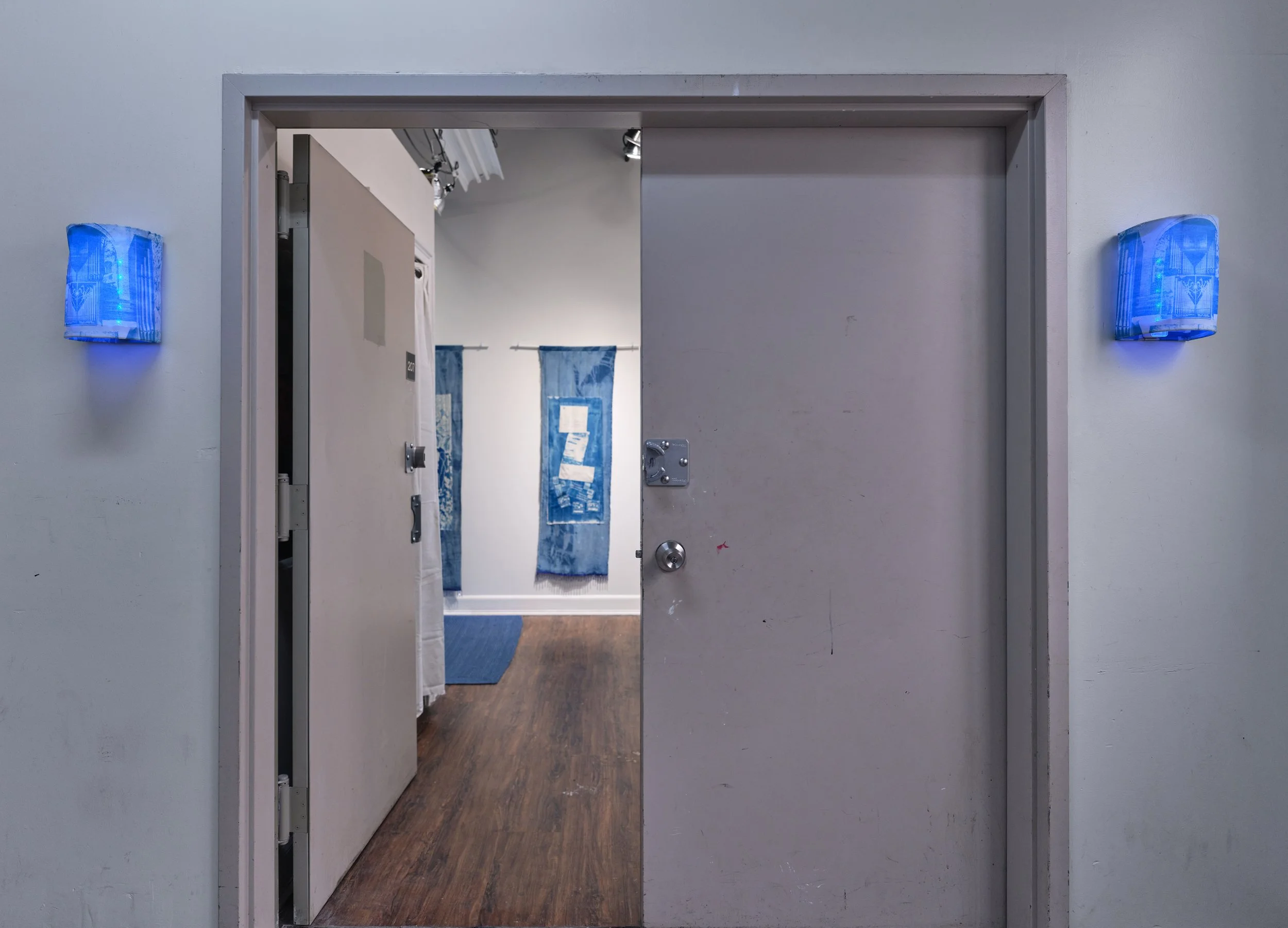
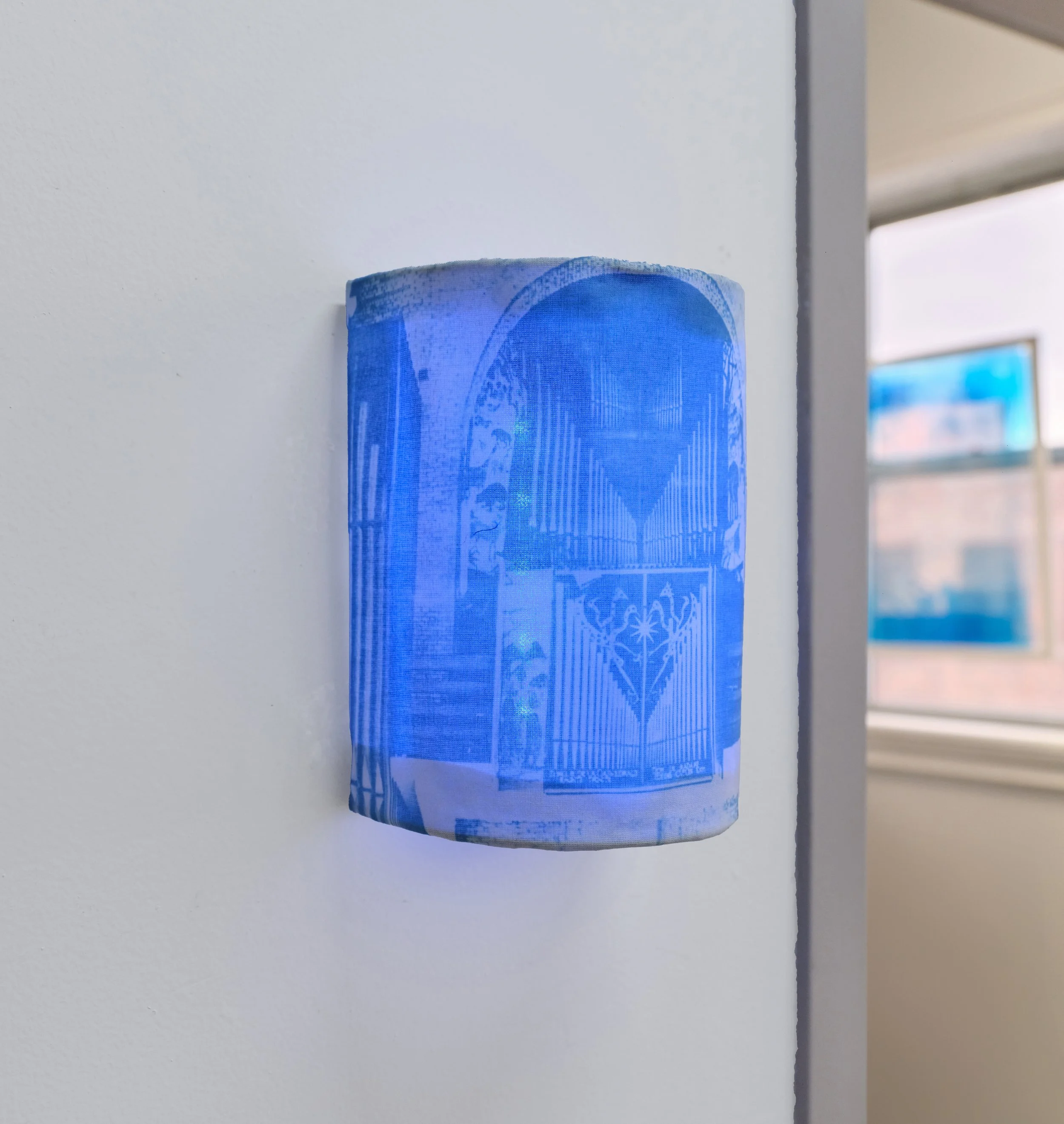
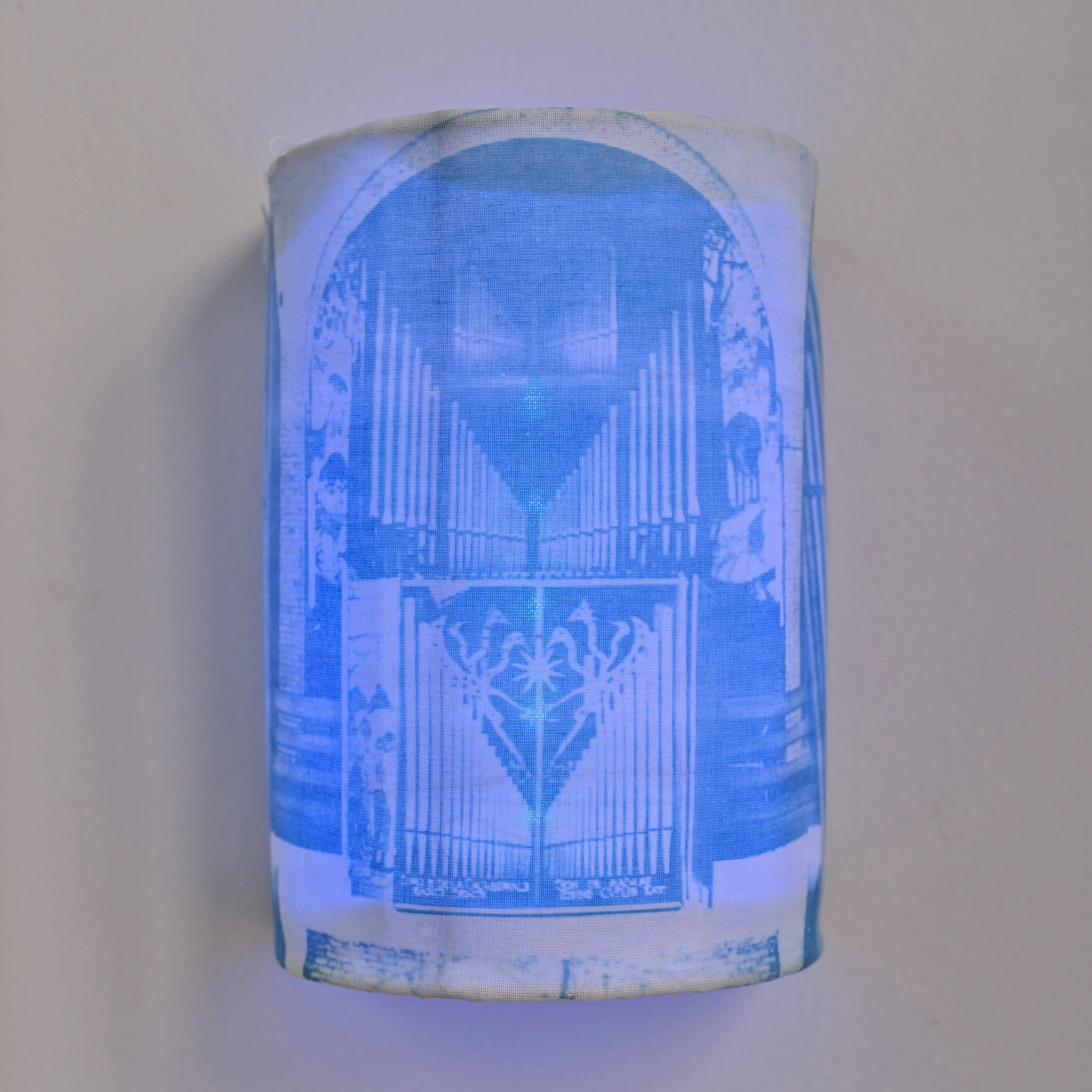
Upon entering the gallery, visitors encounter two fabric lampshades printed with cyanotype images of the organ from the Holy Trinity Cathedral in Port-au-Prince, an architectural and cultural landmark destroyed in the 2010 earthquake, followed by a Victorian style padded frame containing a textile mirror. Indigo fabric with a metallic shimmer is veiled beneath white organza, with prayer cards tucked into the edges of the frame. This threshold object asks what it means to see oneself through diaspora, when reflection becomes obscured and identity emerges through layers of memory, distance, and reconstruction.
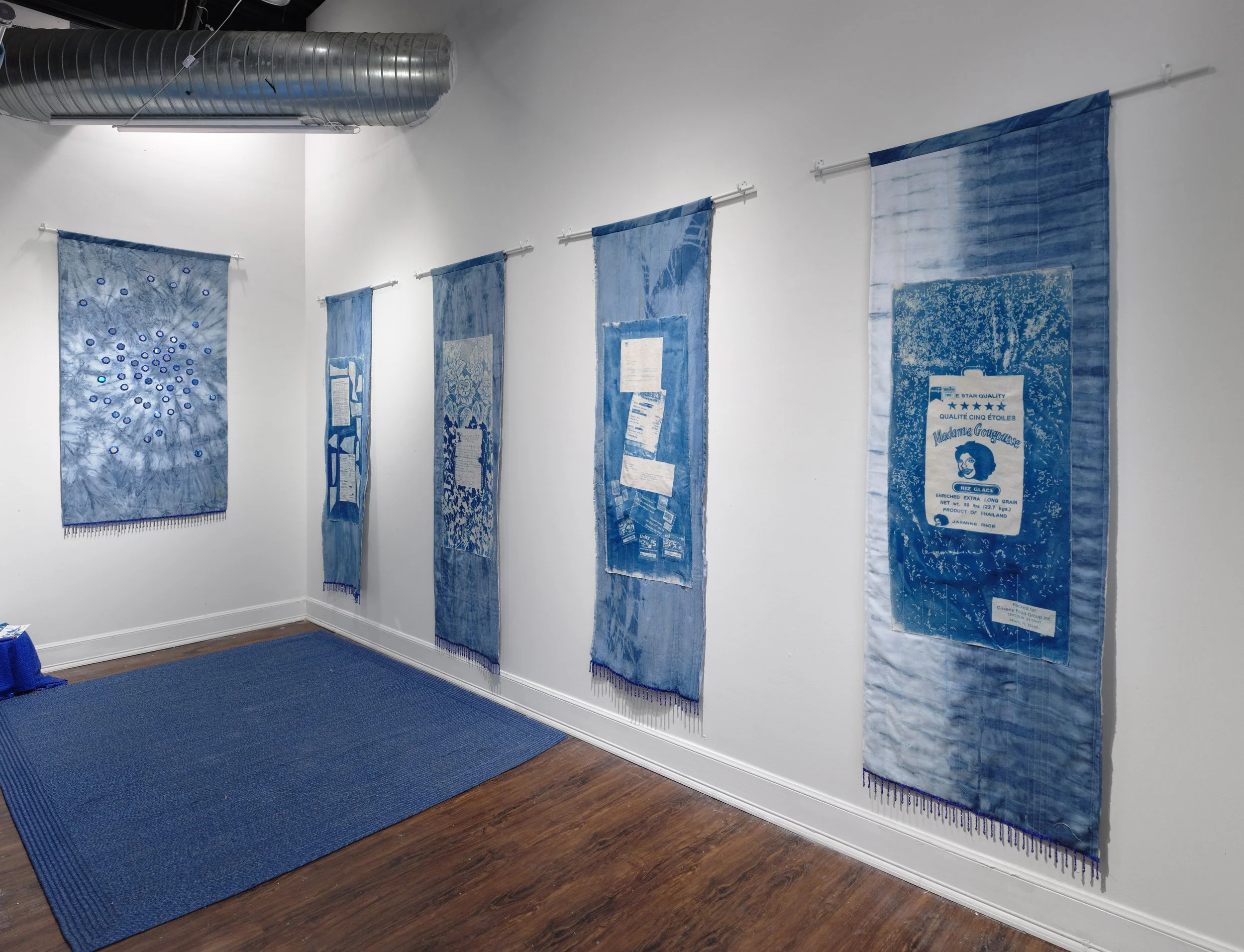
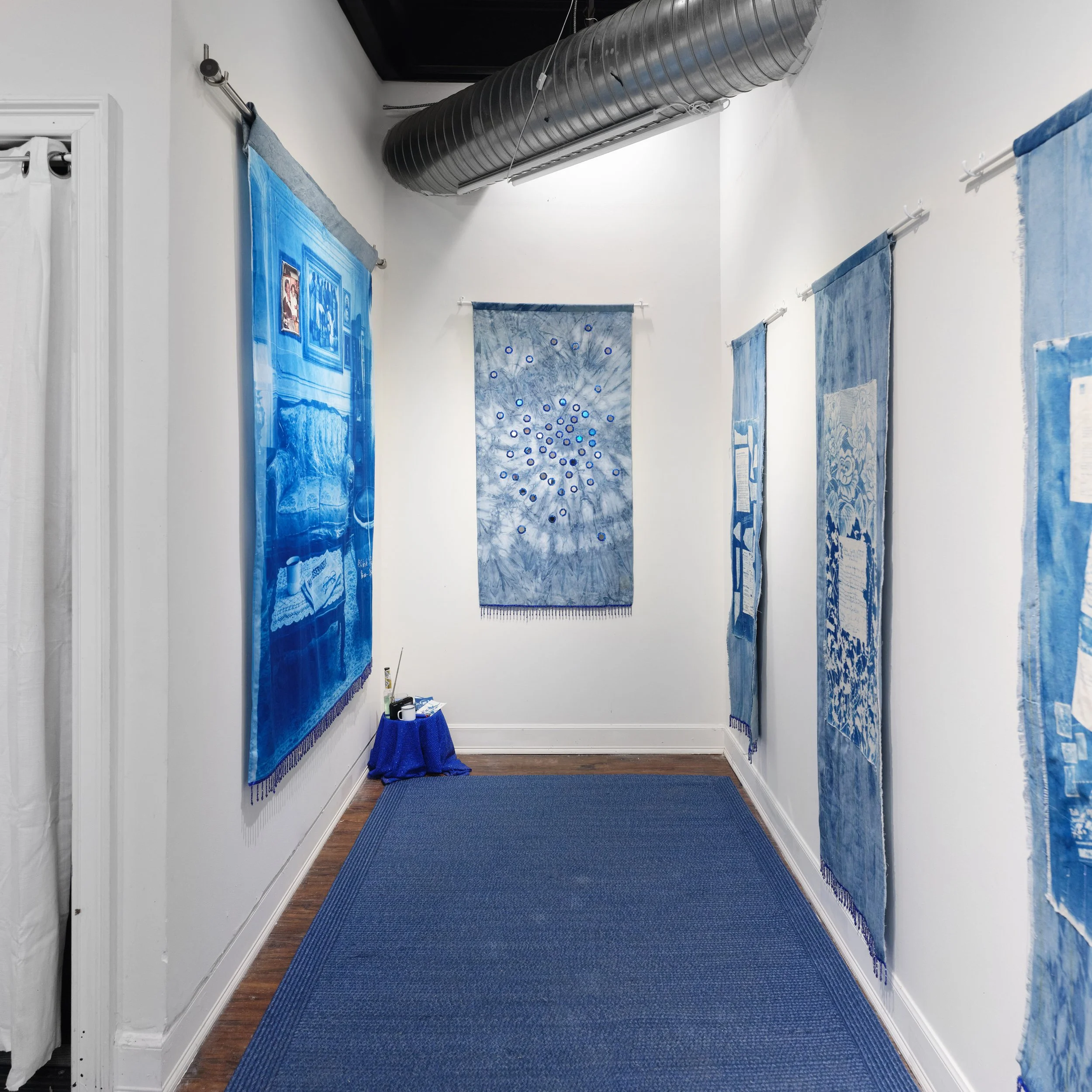
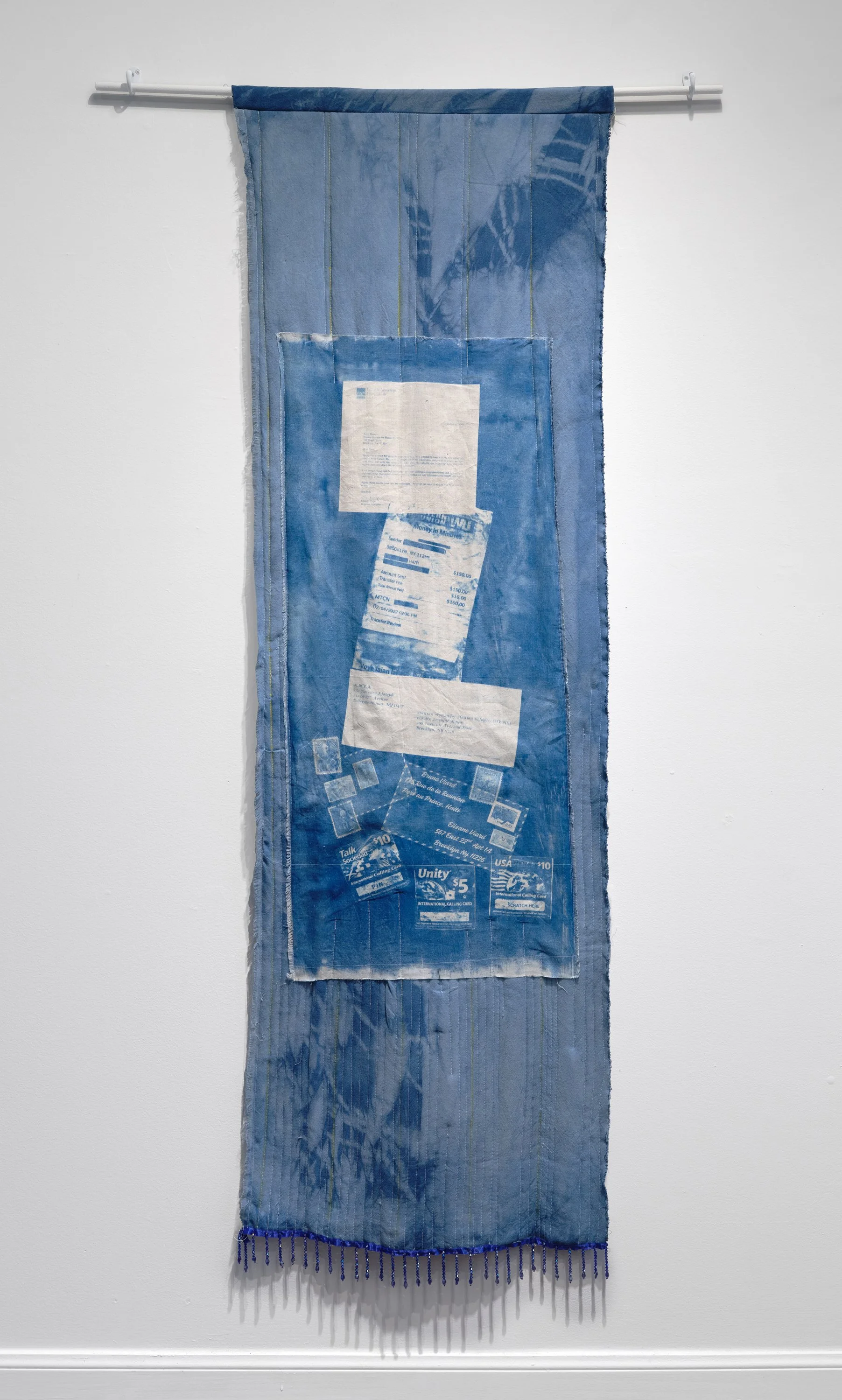
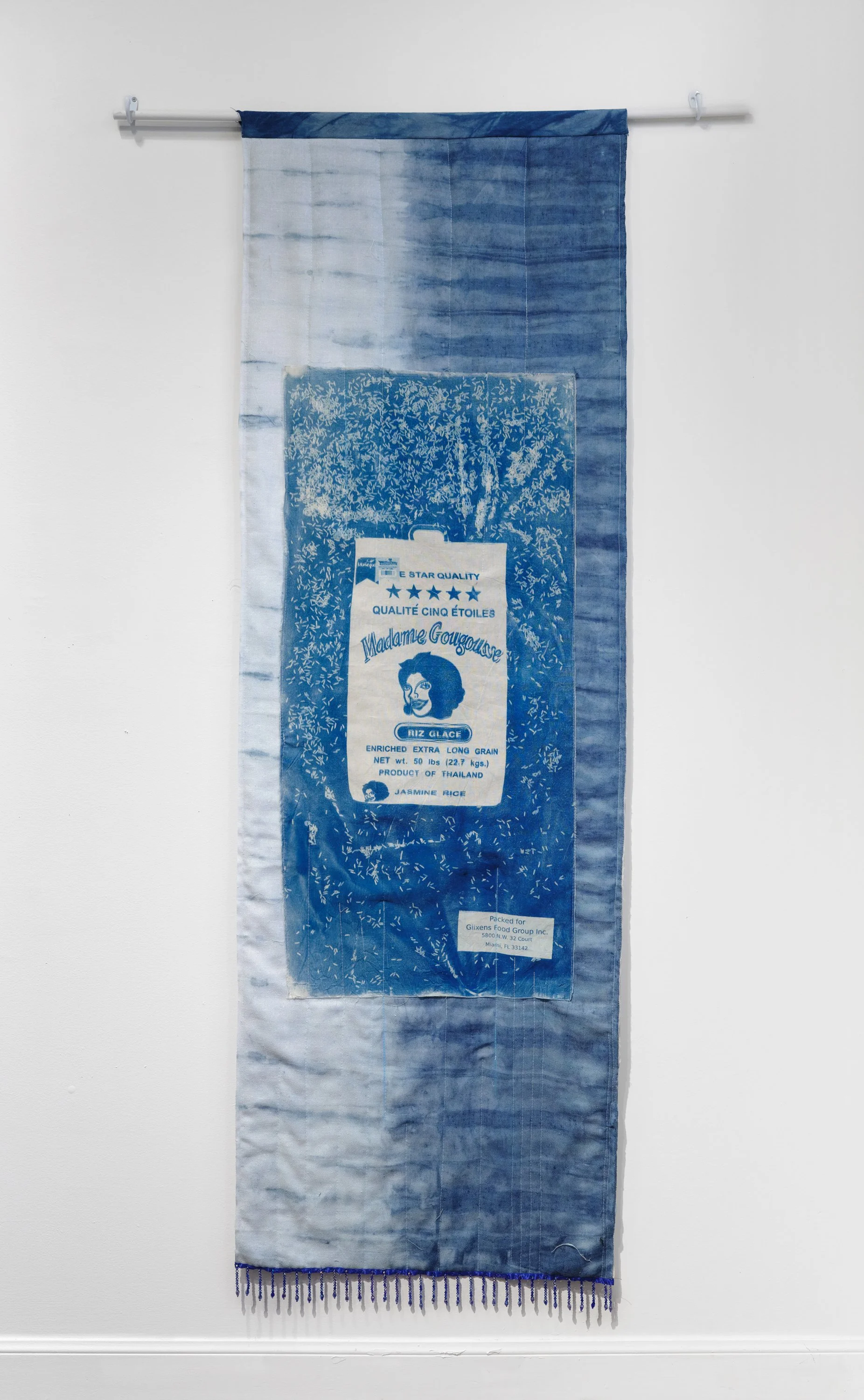
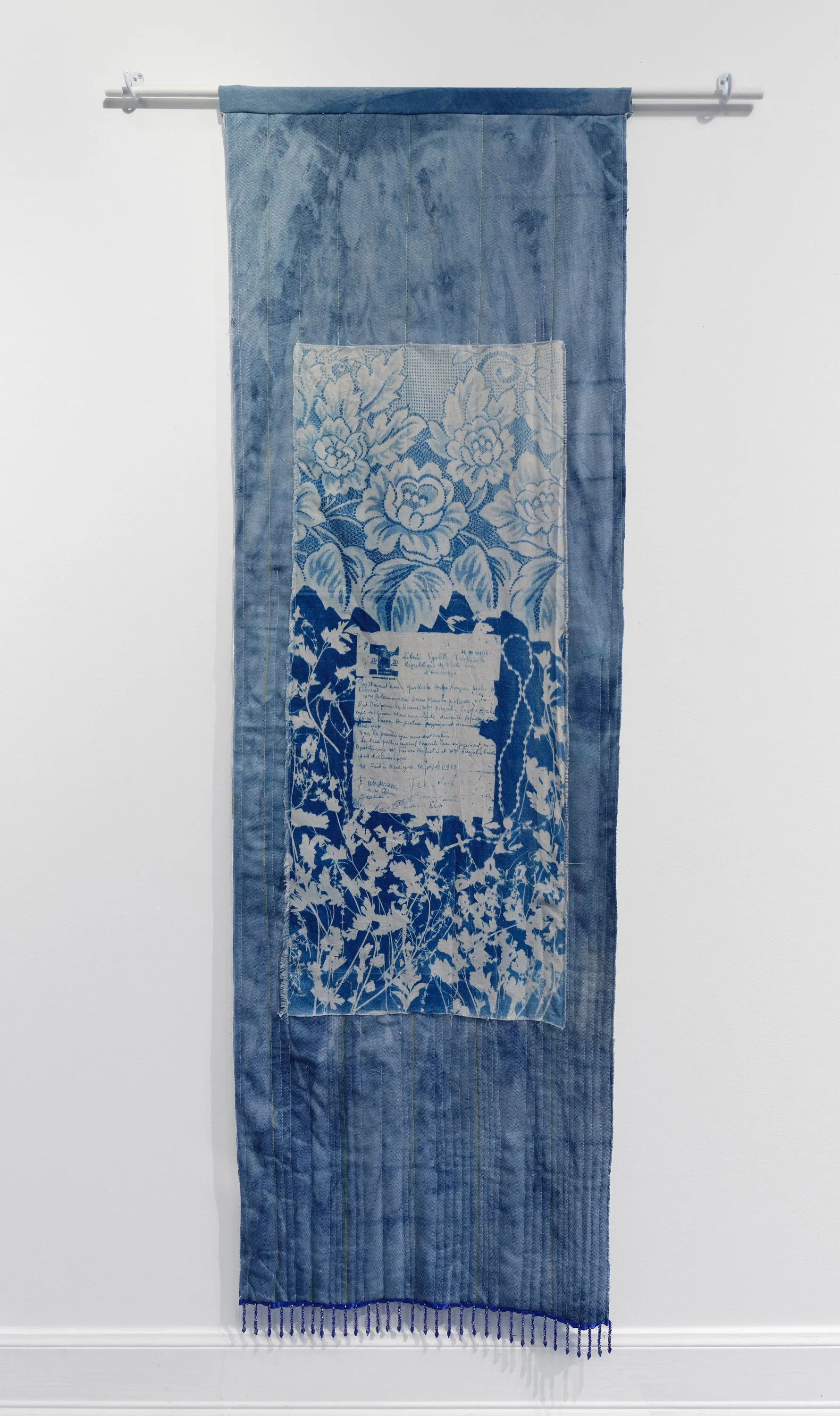
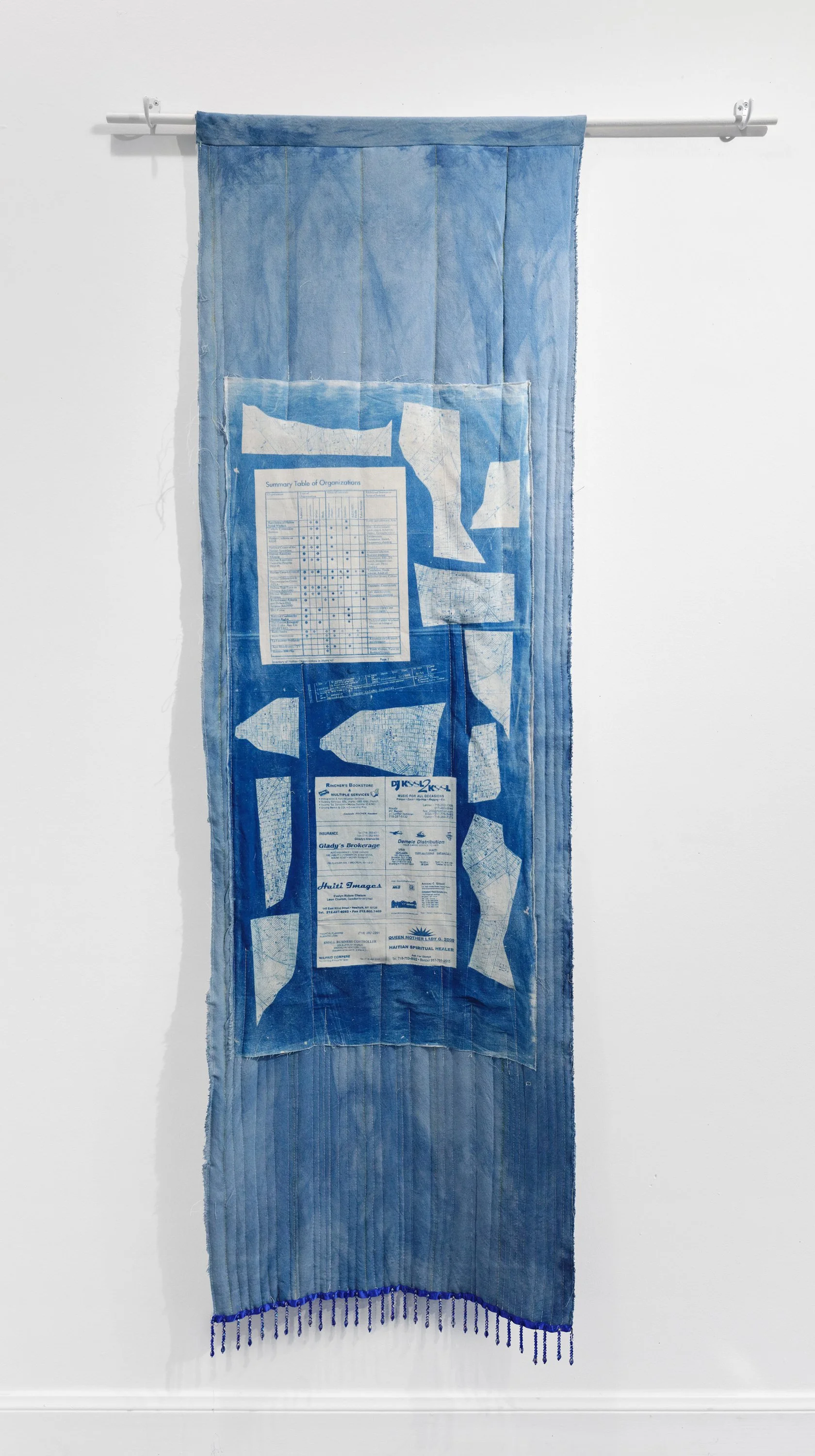
Beyond this point, the exhibition unfolds through four large quilted curtain panels. Each panel contains cyanotype printed textiles depicting archival documents and everyday objects. These include a marriage license belonging to renowned Vodou drummer Frisner Augustin and the spirit Èzili Freda surrounded by herbs and lace, Western Union receipts scattered with rice and beans, hands straining coffee alongside coffee beans and sugar, and a birth certificate surrounded by seeds. These elements represent what travels across borders and what sustains families across distance. They point to what is preserved and what survives the crossing.
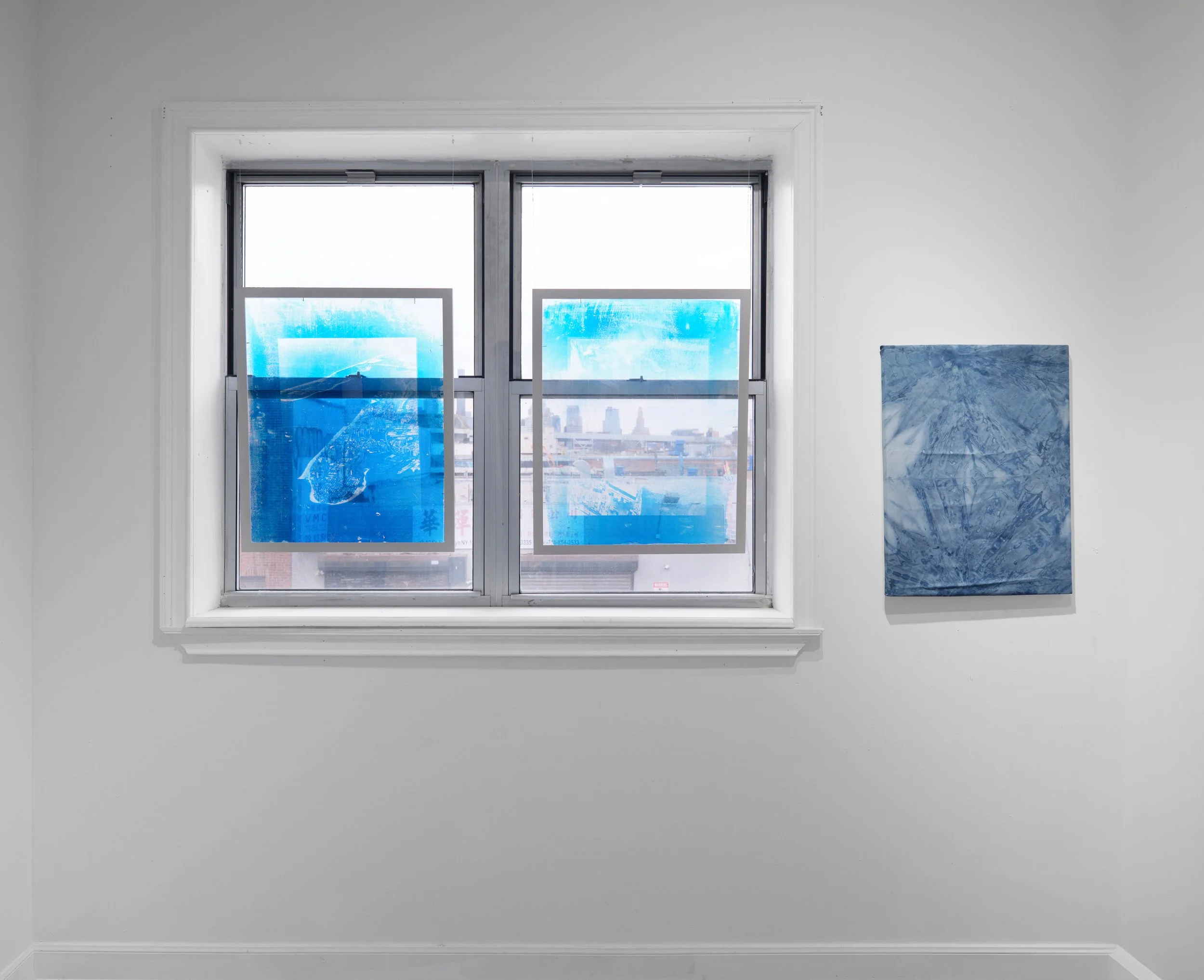
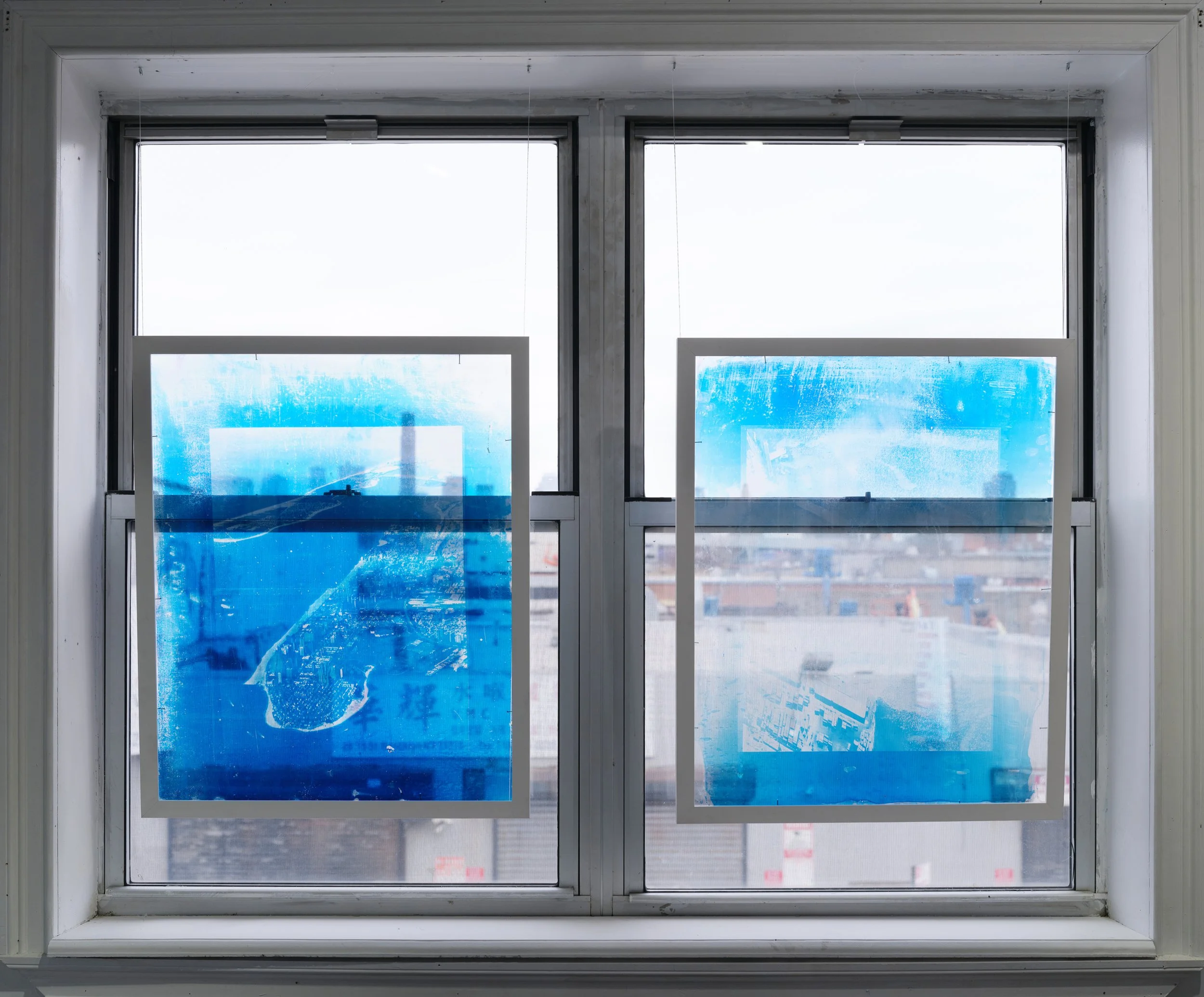
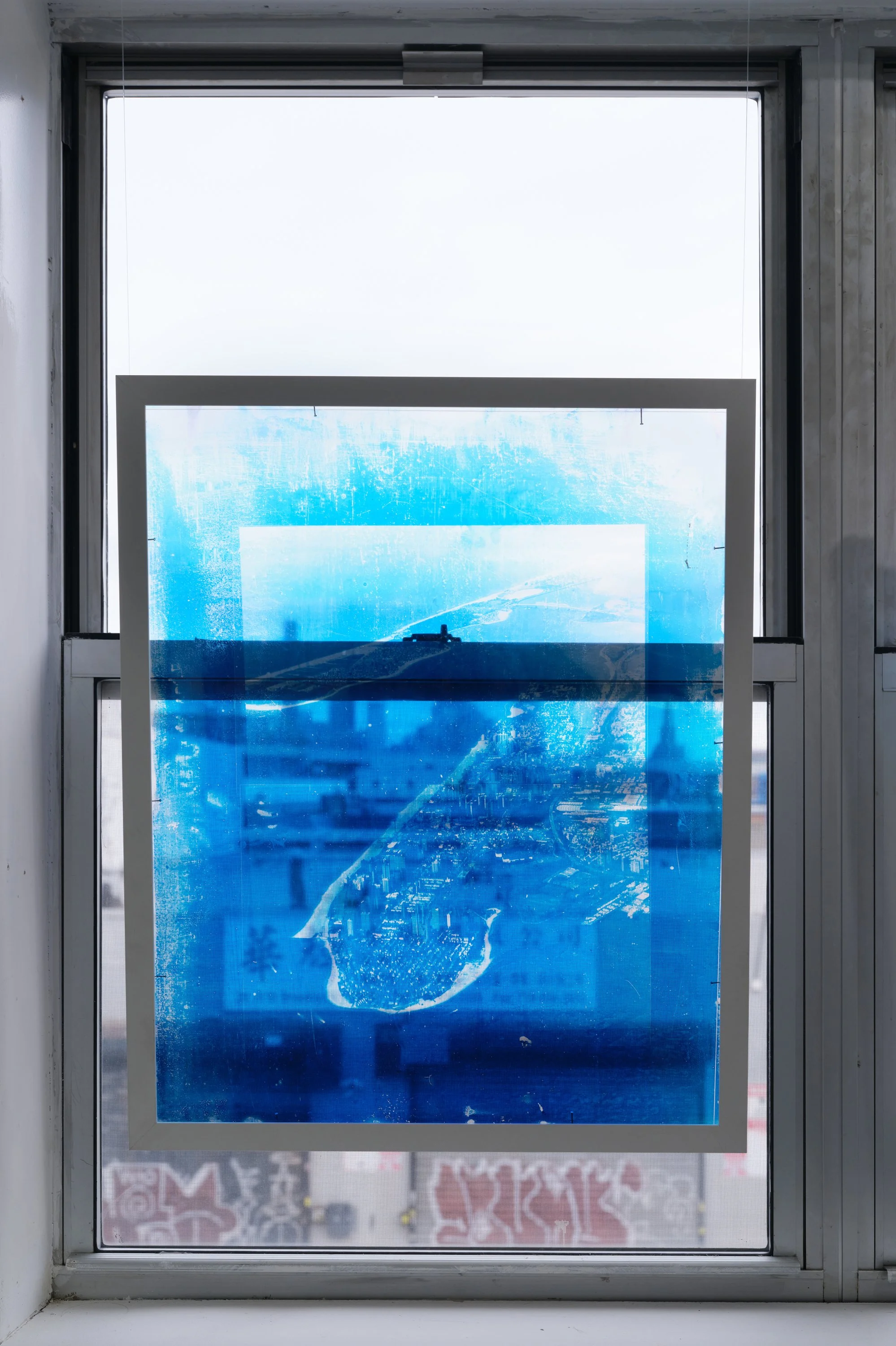
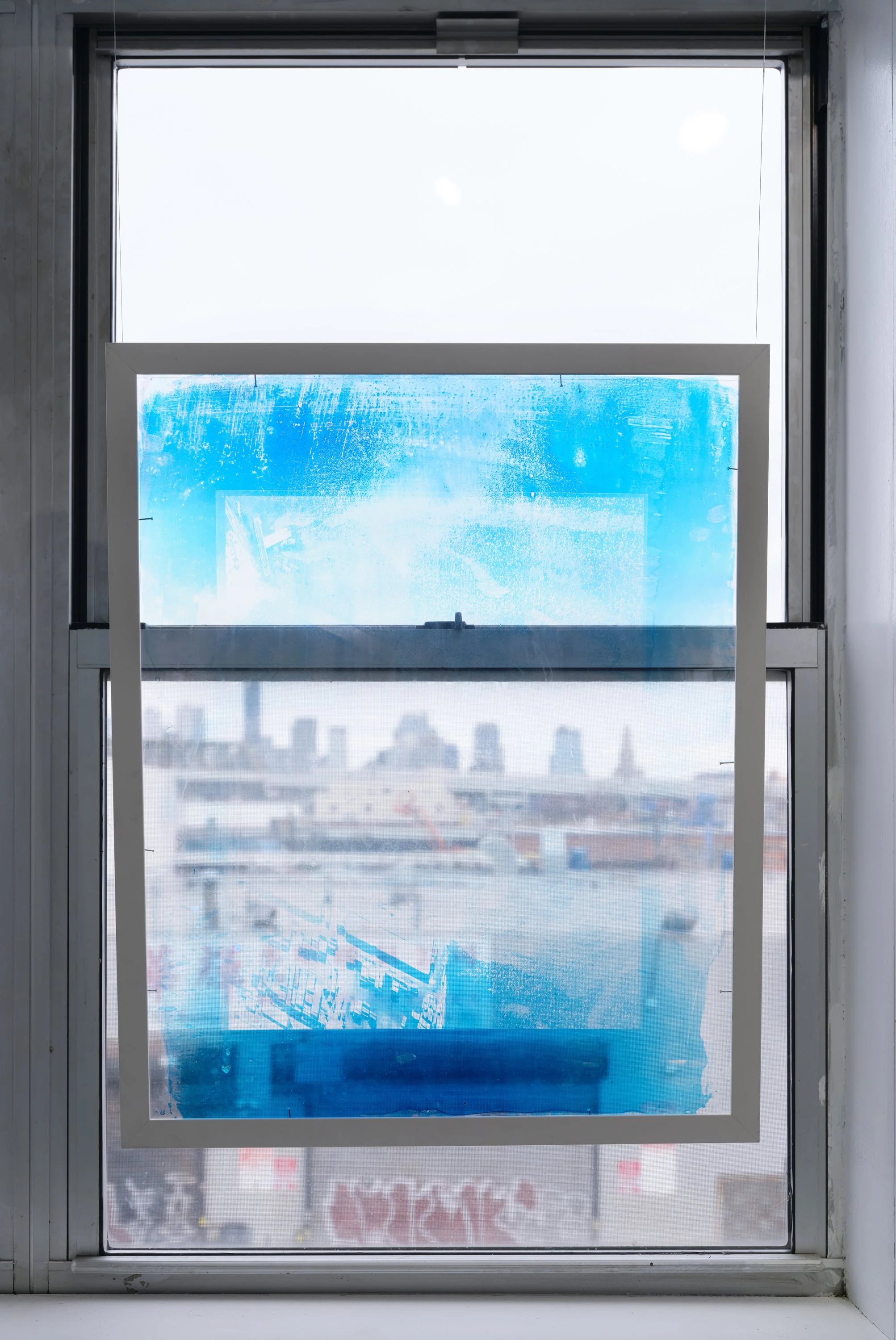
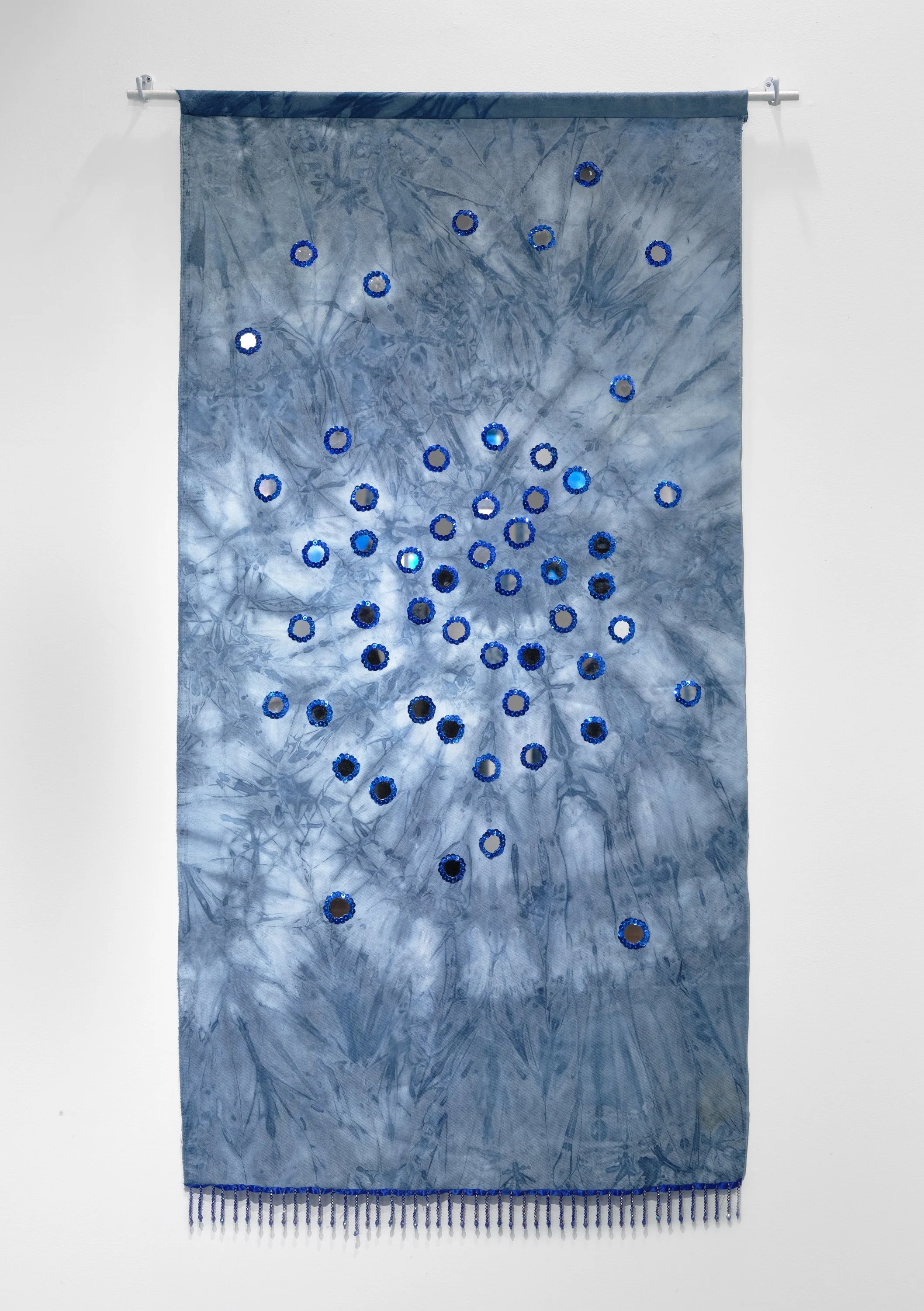
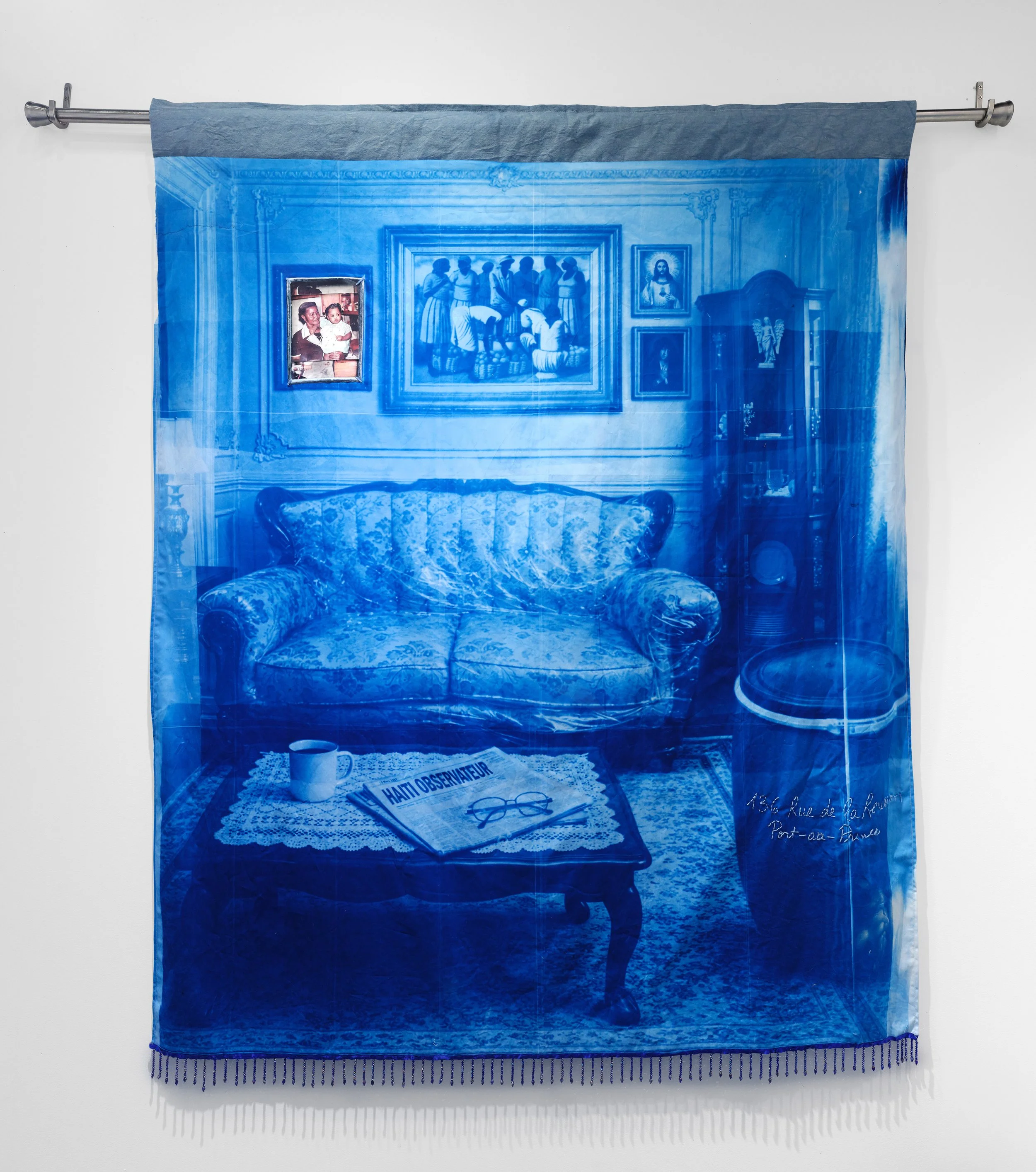
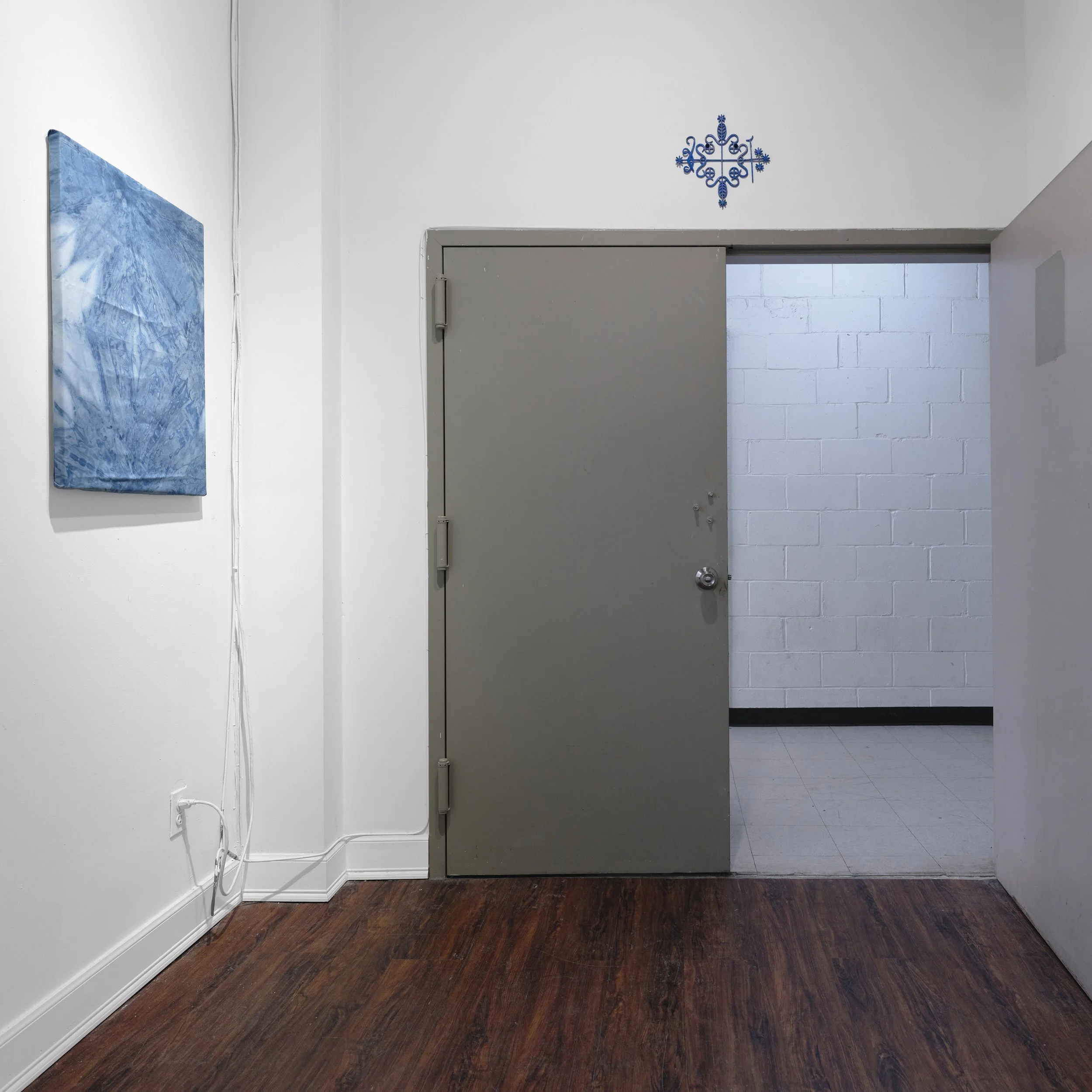
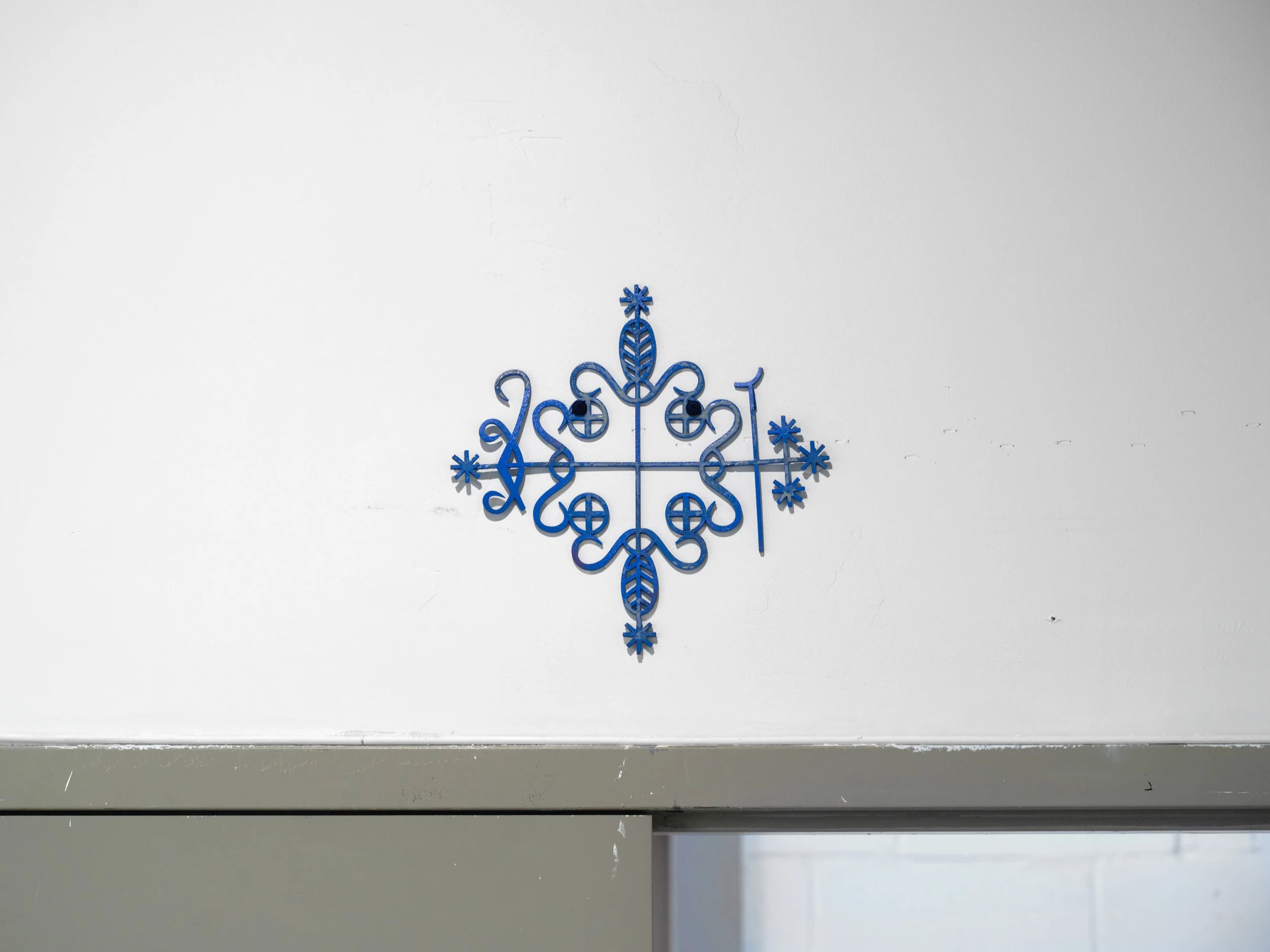
A large indigo dyed textile panel features hand sewn sequined circles radiating from its center, inspired by Vodou flags whose traditions trace back to Benin. Each glimmering circle suggests a portal, referencing spiritual symbols that move and transform through diaspora. Nearby, a large-scale cyanotype textile depicts an immigrant living room with formal furniture, framed photographs, a blue plastic barrel used to ship goods home, and a copy of Haïti Observateur resting on a coffee table. The image reflects the domestic spaces in which cultural memory is preserved and repeatedly encountered, not through formal archives but through everyday life. In the gallery window, a cyanotype glass panel depicting ocean waves allows light to filter through the space, turning sunlight itself into part of the installation.
Between Us responds to ongoing displacement, whether through desired migration or forced exodus. Against this backdrop, Drice’s work operates as both memorial and speculation, holding what has been while imagining what continues. The exhibition asks what remains between people across the ocean, time, and generation.
Special thanks to the Legros family for access to The Haitian Hour / Lè Ayisyen radio archives and to CUNY HSI Archives and Special Collections for their support in the artist’s research.